


How cult Ninja Made Consistency
Feel Real


01The Premise
Fitness has an unusual feedback loop. You book a class, make the commute, put in the effort and wake up sore the next morning, but the reward often comes much later. For someone starting out, that gap can create uncertainty: Am I doing this right? Will I be able to keep up? Is this actually working?
That uncertainty matters most in the first few weeks, when someone is still trying to turn exercise into a routine. Until working out starts to feel like part of life, every session can still feel like a decision. And when the mirror doesn't reflect immediate results, it's easy to question whether the effort is adding up to anything.
That made us think about a different product problem:
How do we give someone enough evidence of progress to believe they're changing before the transformation is visible?
02Before cult Ninja, We Started With Habit Hero
Our first attempt to solve this problem was an initiative called Habit Hero. We started with the question: How might we make invisible progress visible?
The early exploration brought together Yash, Shreeya and Roshni Chandra, alongside our trainers and members of the tech team, including Amandeep Singh, Gaurav Kumar and Samarth Goel.
We explored different ways to represent the journey: 2×2, 2×3, 2×4, 3×3, 3×4, and 2×5. On the surface, these looked like layout explorations. But each one changed how the journey felt. A larger grid could make the finish line feel distant, while a smaller one could make progress feel more immediate.

We combined what we saw in user research with behavioural data, with Darshak Bhagat and Ruchir supporting the analysis that helped us understand what structure could make the journey feel achievable. We landed on three workouts a week for four weeks: 12 sessions. This gave us a clear, achievable structure for building consistency early in a member's journey.
Four weeks wasn't a magic number where a habit suddenly became permanent. We saw it as a horizon close enough to imagine and long enough to build evidence. The goal wasn't to tell someone their habit was complete. It was to give them enough experience to ask, could this be becoming part of me?
Habit Hero gave members a way to see themselves building a routine. That led us to the next question: what if that consistency became visible to the people around them?
03We Started Designing the Journey, Not Just the Tracker
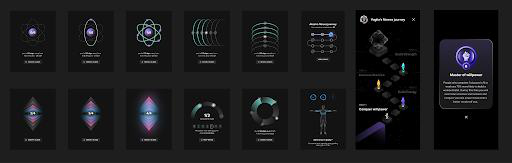
Habit Hero gave us a way to make consistency visible, but we soon realised that 12 workouts couldn't simply be 12 identical boxes to tick. Fitness unfolds over time, and the person arriving for workout one can feel very different from the person arriving for workout 10.
They might be anxious about their first class, tired after a difficult week, proud of making it back, or returning after missing a few sessions. The interface may stay the same, but the emotional state doesn't.
So we started thinking about the twelve sessions as chapters in a journey:
- Sessions 1–3: Conquer willpower
- Sessions 4–6: Build energy
- Sessions 7–9: Increase stamina
- Sessions 10–12: Build strength
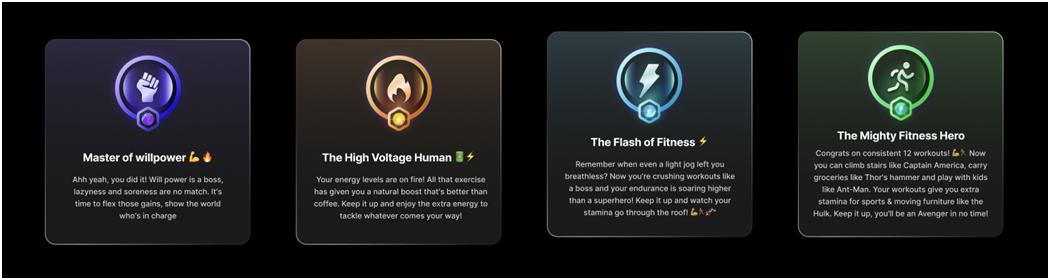
That also changed what the product needed to do at different points. Before a class, it could reduce uncertainty. After one, it could turn the relief of finishing into momentum. After a difficult session, it could help soreness feel like part of progress rather than a reason to stop. And as the finish line came closer, it could show members how far they had already come.
We weren't designing a tracker.
We were designing the interpretation of effort.
04From Personal Progress to Public Recognition
The next question was more social: what if progress wasn't only visible to the person making it?
An insight from our research called The Marathon Effect helped shape the idea. Publicly acknowledging an achievement in front of peers could help someone internalise what they had accomplished, while showing others that the same goal was possible for them too.
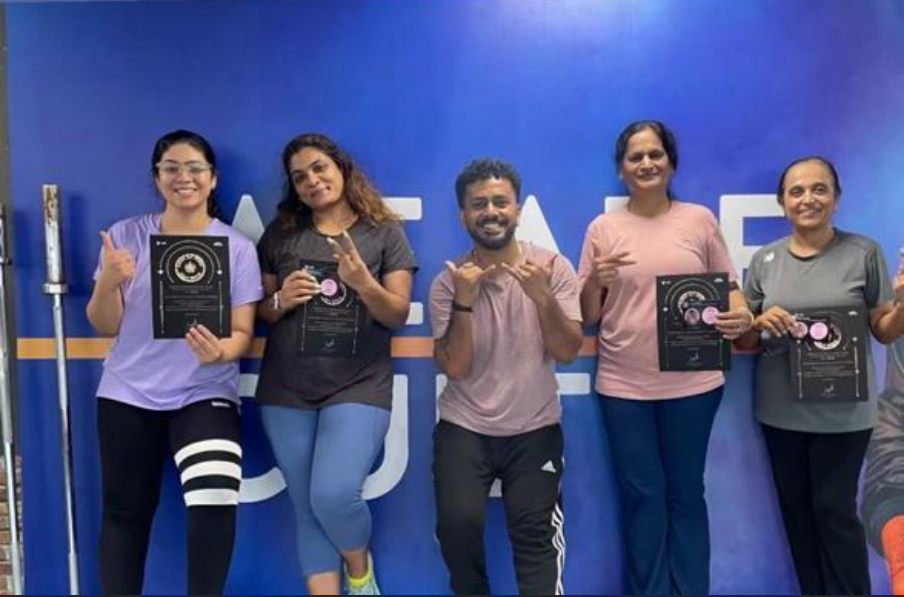
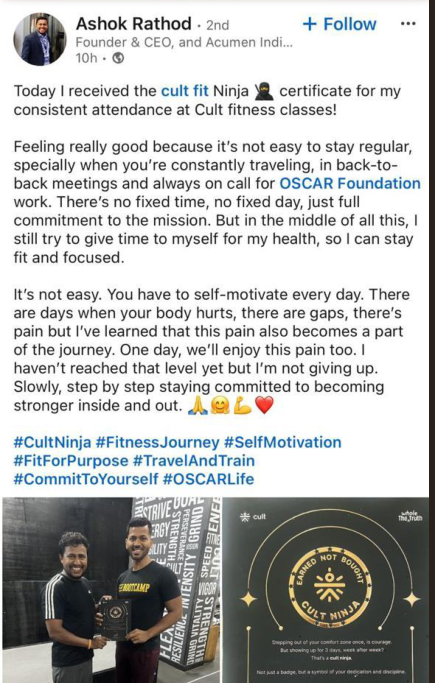
We had already tested whether the reward itself could do the job. In Bangalore, certificates and a water bottle showed a positive lift, but the model was difficult to sustain. That became the thinking behind cult Ninja. After completing twelve sessions, a member wasn't just shown a milestone in the app. A trainer recognised the achievement in front of the class. That pushed us to look beyond the object and think about the status attached to the achievement.
05The Hardest Interface Was a Human
If cult Ninja had been purely digital, it would have been much easier to build. But the most important interface wasn't a screen. It was a trainer in the class, recognising a member in front of their peers.
For that moment to happen well, the system had to identify who had completed the milestone. Centres and trainers then needed to know whom to recognise, when to do it, and what to say without making the moment feel scripted.
That changed how we thought about the product. The app was only one part of the experience. The trainer, the timing, the words, the centre environment and the handover all shaped what the member actually experienced.
Making the ritual work in one centre was one challenge. Making it repeatable was another. Karan Mehta helped make the Bengaluru rollout repeatable, while Muskan Atar helped take the experience across India.
Code can standardise a flow. A human ritual is different. It has to be taught, supported and cared for. That was the part we couldn't reduce to a screen. And, in many ways, it was the part that mattered most.
06What We Learned About Motivating a Person
Looking back, the lesson wasn't really about building a better tracker.
It was about understanding what someone needs between deciding to start and becoming the person who keeps going.
Progress needs to be visible before the final outcome arrives. The experience has to meet the person where they are. And technology can create the conditions for a human moment, but it can't replace one.
The hardest metric to move isn't a booking, a streak or even 12 completed workouts. It's the voice in someone's head about who they're becoming.
07Beyond the Interface
The product may have lived partly in an app, but the experience was built by many more people than the people designing the interface.
Santhosh Kumar, Mujtabha Magrey, Naresh Krishnaswamy, Renuka Chaturvedi, Pooja Dandey, Darshak, Amandeep, Muskan, Karan, Akash and Shubham Aneja supported the journey, alongside the trainers, centre teams and everyone who helped turn the idea into something members could experience.
Because ultimately, cult Ninja wasn't just a feature we shipped. It was a system of people, technology and small moments working together to make progress feel real.
08The Next Challenge Was Scale
cult Ninja showed us how to make consistency visible and meaningful. But we found ourselves a new challenge: How do you deliver this as an experience that can work consistently across centres, cities and teams?
Read More: The System Behind cult Ninja’s ScaleMore from
Engineering
category


